
Every Salento dish is a chapter in a novel written by hand, where the ingredients are words and the recipes are poems. From crispy leavened breads to traditional soups, let us discover together the protagonists of this timeless cuisine.
Fried Calzone: The Flavour Bomb That Defies the Diet
A disc of leavened dough, filled with tomato, onion, black olives and capers, closed into a half-moon and fried in boiling oil. The result? A golden crust that hides a heart of Mediterranean flavours.
- Why it makes you fall in love: It is the street food par excellence, eaten in bites while walking through the markets of Lecce.
- Curiosity: It is given to women who have just given birth as a wish for abundance. Why? Because it is “rich” like mother’s milk!
Rustico Leccese: The Aperitif That Is a Hug
Two very thin sheets of pastry enclose creamy béchamel, stringy mozzarella and black pepper. Heated in the oven, it is an explosion of comfort that unites the French soul (the béchamel) with the Apulian heart.
- Secret: The true Salento béchamel is made with sheep’s milk and freshly grated nutmeg.
- Where to eat it: At Lu Rusticu, a historic shop where they bake them in front of you.
Puccia and Pizzi Leccesi: Bread Turned into Art
- Puccia: A round wholemeal roll, leavened with sourdough and baked in a wood-fired oven. It is filled with grilled vegetables, octopus or sausage.
- Pizzi Leccesi: Glazed flower-shaped biscuits, scented with cinnamon and cloves.
- Curiosity: The puccia was born as the farmers’ bread: the round shape symbolised the sun, source of life.
Taralli Leccesi: The Circles That Unite
Smaller and crunchier than the classic Apulian taralli, they are made with white wine, oil and pepper.
- Why they are special: In Lecce, they are dipped in Caffè Leccese for a bold breakfast.
- Where to find them: At Gino’s bakery, which still sells them in straw-paper bags.
Frisa: The Bread That Drinks the Sea
Hard durum-wheat bread, twice baked (like a rusk), soaked in sea water and dressed with tomato, oil and oregano.
- History: It was the fishermen’s meal, who wetted it with salt water when fresh water was scarce.
- Gourmet version: Today, it is topped with sea urchins or bottarga.
Pitta di Patate: The Savoury Pie That Defies Time
A layer of puff pastry, one of mashed potato enriched with onion, olives and anchovies, and another of pastry.
- Why people love it: It is the dish of humble feast days, where potatoes replaced meat.
- Curiosity: It is cut into diamonds and given to neighbours as a gesture of peace.
Fave e Cicorie: The Humble Masterpiece
A purée of dried broad beans served with boiled wild chicory and a drizzle of raw oil.
- Philosophy: The symbol dish of cucina povera, where the bitterness of the chicory balances the sweetness of the beans.
- Where to taste it: In the masserie, where chicory is still picked at the edges of the fields.
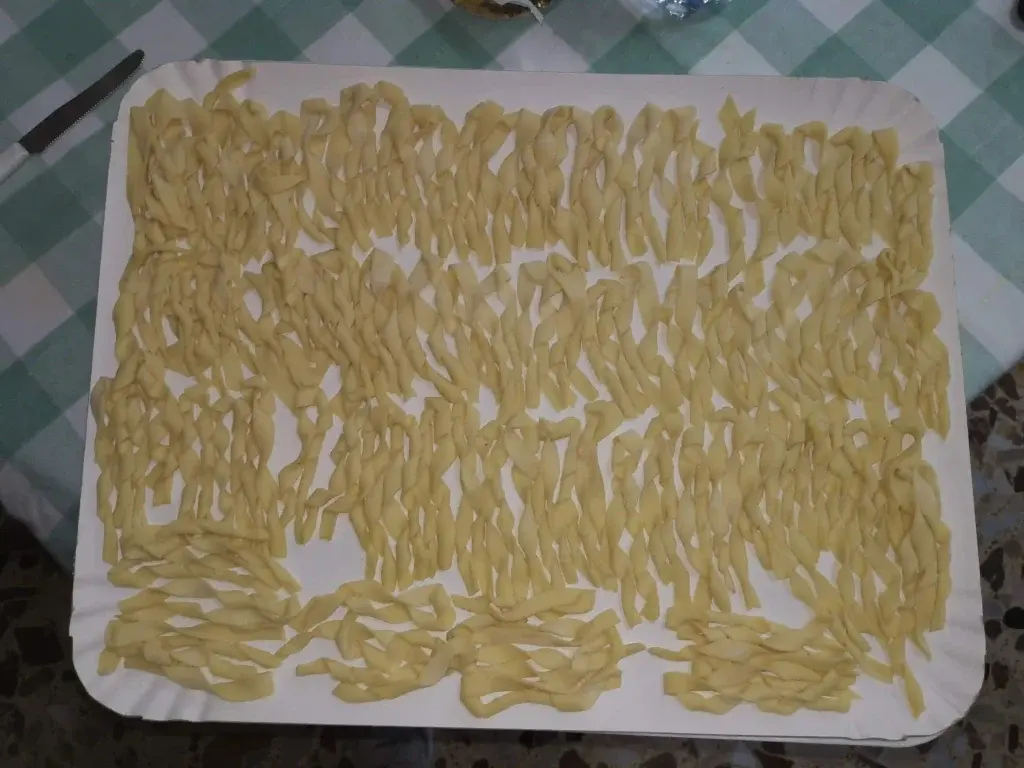
Ciceri e Tria: The Pasta That Plays Hide-and-Seek
A mix of fresh pasta (tria) and chickpeas, where half of the tria is fried in boiling oil.
- Origins: The fried tria mimics fish, an expensive ingredient replaced by ingenuity.
- Ritual: It is eaten on 19 March, the feast of Saint Joseph, to bring a good harvest.
Orecchiette with Ricotta Forte: A Courageous Love
Orecchiette dressed with fermented ricotta (spicy and creamy), tomato and basil.
- Ricotta forte: It is made by letting fresh ricotta mature for months, until it develops noble moulds and an intense flavour.
- Tip: Pair it with a full-bodied red wine, such as Negroamaro.
Tarallini al Vino: The Biscuits of Welcome
Small rings of dough made with red wine, oil and pepper, baked until golden.
- Tradition: They are offered to guests with a glass of Primitivo as a sign of welcome.
- Sweet variant: There is a version with sugar and cinnamon, called “tarallucci”.
Pittule: Grandmother’s Little Clouds
Balls of leavened dough, fried and dressed with anchovies, cauliflower or simply sugar.
- When they are eaten: During the Christmas holidays, but also for San Martino and Carnival.
- Curiosity: The rounded shape recalls coins, a wish for prosperity.
Why Are These Dishes the Soul of Salento?
- They are memory: Every bite is a meeting with grandmothers kneading, fishermen telling tales, farmers blessing the land.
- They are resilience: Born of necessity, they turned little into much, bitter into sweet.
- They are sharing: There are no single portions. Here, you eat from the same pot, you break the same bread.
An Invitation to Get Your Hands (and Heart) Dirty
Tasting Salento is not a passive act. It is getting your fingers oily with the calzone, licking the honey from the pittule, laughing with strangers in front of a giant frisa. It is understanding that food, here, does not fill the stomach: it nourishes the soul.
Want to live this experience? Follow our blog: every month, we reveal a secret recipe and the authentic places where you can taste it. Because Salento is not told: it is savoured.
Salento is not a destination: it is an endless lunch, where every course is a hug. 🍴🌞