Specchia: the village that breathes history, among white stone and thousand-year-old olive trees
Walking through the old village of Specchia is like leafing through a living history book, where every alley is a page and every stone a word. Perched on a hill in the heart of Salento, this gem – a member of the club “I Borghi più Belli d’Italia” (The Most Beautiful Villages of Italy) and awarded as a “Gioiello d’Italia” – is not just a place: it is an emotion that unfolds step by step, among dry-stone walls, flowering arches and silences that smell of oregano.
A labyrinth of light and shadow
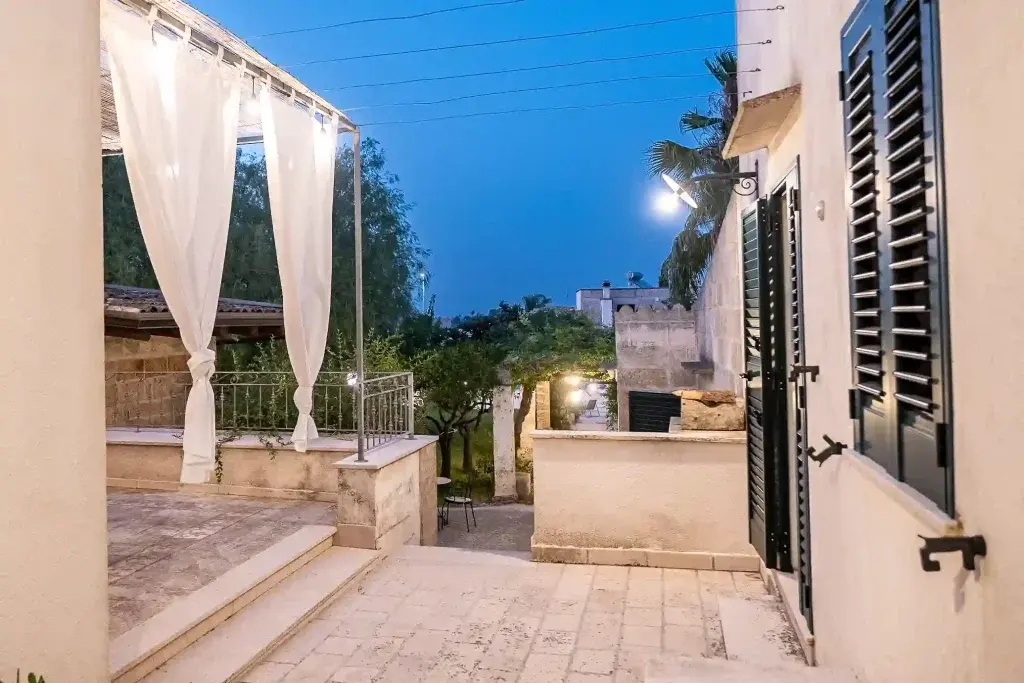
The historic centre, a tangle of narrow streets paved in white Lecce stone, seems to have been drawn by a Renaissance artist. The houses, pressed one against the other as if to protect themselves, tell of centuries of defence against Saracen raids. The “canyon alleys”, narrow and shady, suddenly open into little squares where the sun caresses noble palaces with Baroque façades and wrought-iron balconies. Here, architecture is a dialogue between ancient powers: the Risolo Castle (16th century), with its massive towers, looks down on the delicate Church of the Madonna Assunta, an example of sober Gothic that hides a gilded 18th-century organ.
Stone that becomes poetry
Specchia is a triumph of details that speak of craftsmanship and devotion:
- Carved doorways: mythological animals, flowers, family crests – every entrance is a story in bas-relief.
- The “star vaults”: in the underpasses that connect the alleys, the cross-vaulted ceilings create plays of light that look like constellations.
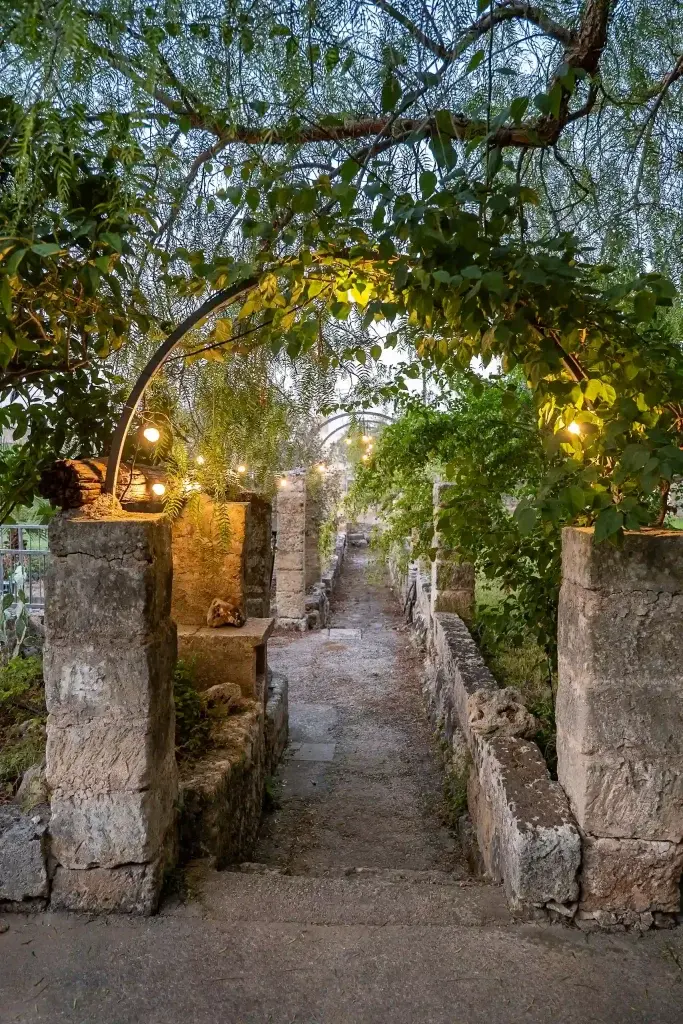
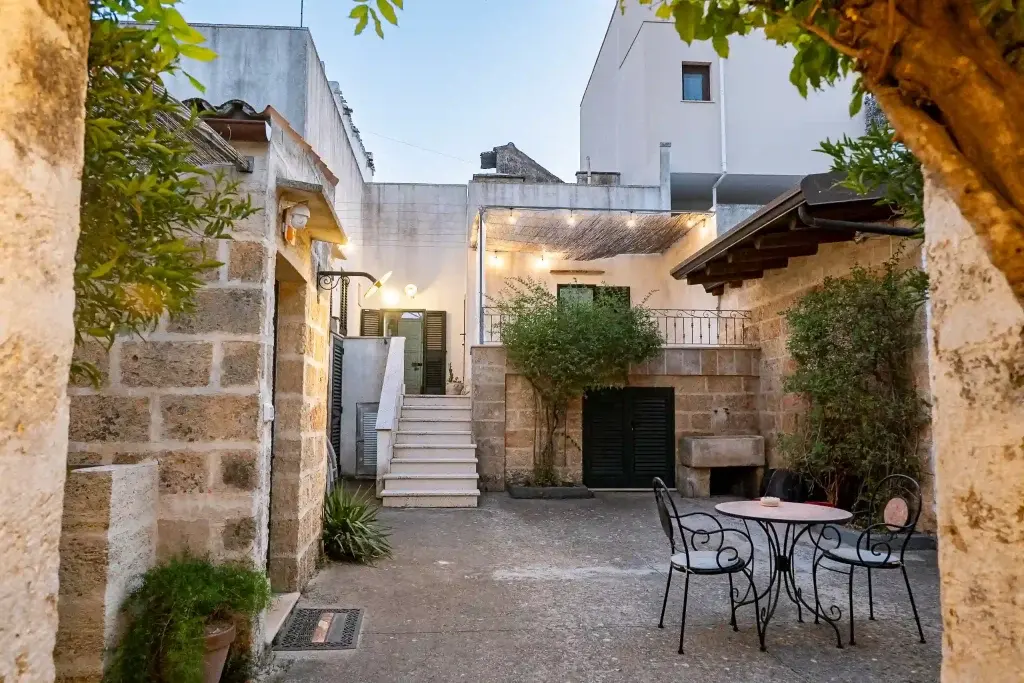
- The inner courtyards: open a wooden gate and you will find secret gardens with lemon trees, ancient wells and external staircases wrapped in bougainvillea.
A village that lives (and does not sleep)
In Specchia, the past is not a relic but daily lifeblood:
- Craft workshops: look for the blacksmith’s workshop forging iron lamps as in the 16th century, or the ceramicist who paints pumi (apotropaic decorations) with Greek-Byzantine symbols.
- Green gold: the underground olive mill in Piazza del Popolo, dug into the rock, bears witness to an olive-growing tradition that has lasted for millennia. Today, local companies win international awards with fruity, peppery oils.
- Festivals that unite the sacred and the pagan: during the Feast of Saint Anthony (17 January), bonfires as tall as houses light up the night, while in July the “Notte Bianca della Pietra” turns the village into an open-air art gallery.
Why is Specchia a unique “gem”?
- The silence that speaks: here you will not hear horns or engines, only the wind whispering through the alleys and the tapping of footsteps on the stone.
- A magnificent view: from the Terrace of the Century-old Olive Trees, the eye ranges as far as the Adriatic Sea, in a panorama that combines silvery olive groves, fortified masserie and the distant blue of the horizon.
- Authenticity without filters: in Specchia there are no kitsch souvenir shops, but trattorias where you can taste ciceri e tria (pasta and chickpeas with fried pasta) and pharmacies that still smell of medicinal herbs.
Curiosities few people know
- Beneath the village lie hidden medieval cellars and crypts, some turned into venues for candlelit dinners.
- The little Church of Saint Nicholas of Myra, small and hidden away, keeps a 15th-century fresco that portrays the saint with a very gentle, almost human face.
An invitation to get lost (to find yourself)
Specchia is not visited: it is lived. It is the pleasure of sitting on a stone staircase with a coffee in your hand, listening to the old men of the town discussing politics in the Salento dialect. It is the wonder of discovering that the Museum of Vintage Radios (yes, it exists!) is housed in a 17th-century cave house. It is the feeling of being a guest, not a tourist, in a place where time is not money, but a gift.
Come to Specchia when the sun is low, when the white stone turns to gold and the shadows draw arabesques on the walls. You will find more than a village: you will find a soul.
Specchia is not on the map: it is in the heart of those who walk it. 🌿✨