
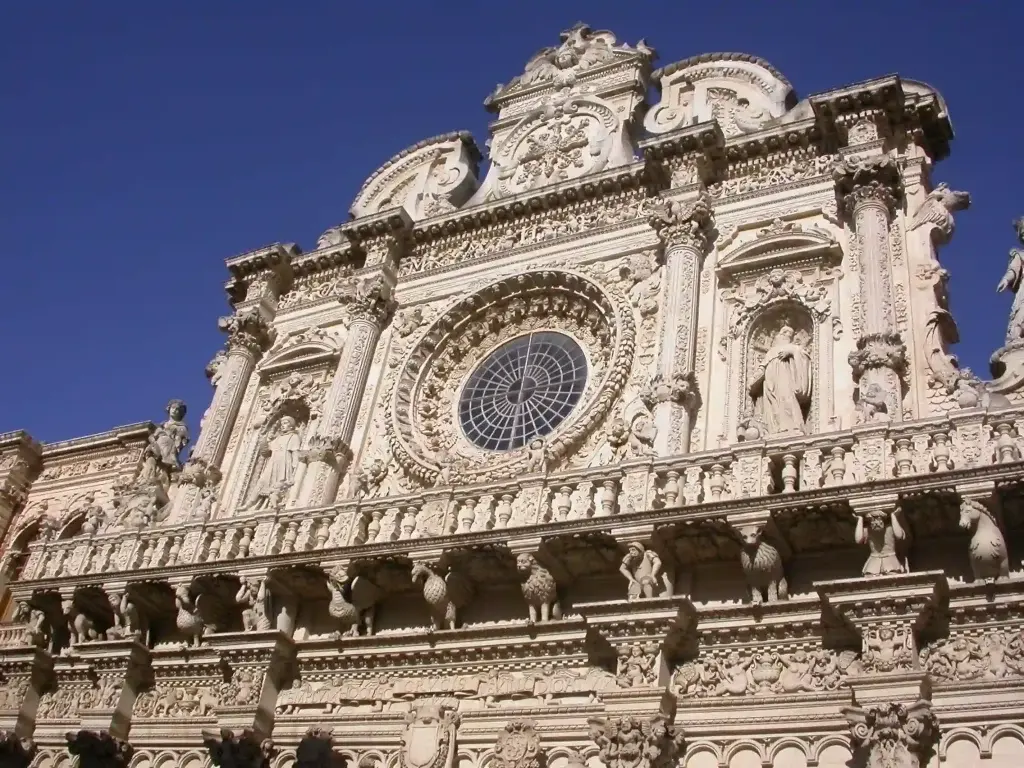
Lower Salento is a mosaic of places where every stone, every wave and every dish tells a thousand-year-old story. Here is a journey through its most precious pearls, where the hinterland converses with the sea in perfect balance. Among the alleys of Specchia, the beaches of Leuca, the mosaics of Otranto and the flavours of Maglie, you will discover that this land is not visited: it is inhabited, even if only for a few days. And when you leave, you will take away a piece of its soul… and the desire to return.
Where time is measured in seasons, not hours, and every stone tells a story. Lower Salento, among millennia-old olive trees and dry-stone walls, is not just a land of sea: it is a living museum of traditions, where the hinterland keeps secrets that hurried tourism does not know. Living here means embracing the slow rhythm of those who know that beauty is to be savoured, not consumed.
Come as tourists, leave as storytellers. 🌍🍋
Specchia: the village that breathes the Middle Ages and smells of olive oil
Perched on a hill between two seas, Specchia is one of the “Most Beautiful Villages in Italy”, a labyrinth of white stone where past and present dance in perfect harmony.
Underground oil mills: the subterranean cathedrals of green gold
Descending into the depths of Specchia is a mystical experience. The underground oil mills, dug between the 15th and 18th centuries, are caves where generations of farmers turned olives into liquid gold.
- How they worked: huge stone millstones turned by donkeys, oil torches lighting tired faces, wells to store the precious liquid.
- Why visit them: in Specchia, the oil mill in Piazza del Popolo is still intact. Touching those damp walls means feeling the sweat of our ancestors and understanding why oil here is sacred.
Convent of the Black Franciscans: where silence speaks of history
Founded in 1531, this convent is an oasis of peace outside of time.
- The legend: it is said that the friars grew medicinal herbs in the garden, still flourishing today.
- What to see: the church of Santa Maria del Passo, with its Baroque altar, and the cloisters where the monks meditated under the citrus trees. Don’t miss the faded frescoes that tell of forgotten miracles.
Church of Sant’Eufemia: a Baroque jewel among the alleys
Small but majestic, its carparo-stone façade hides an interior that takes your breath away:
- The wooden ceiling: carved with angels and saints, it seems to fly above the wooden pews.
- The mystery: look for the statue of Sant’Eufemia with the lion at her feet: according to tradition, stroking its paw brings good luck.
Medieval historic centre: a labyrinth of wonders
Strolling through Specchia is like leafing through a book of fairy tales:
- Via degli Archi: under vaults that look like protective arms, among ceramists’ workshops and seamstresses who still sew by hand.
- Flowered courtyards: peek through an ancient gate and discover secret gardens with wells and lemon trees.
- Noble palaces: such as Palazzo Risolo, with its defensive towers turned into terraces from which to admire the distant sea.
The Salento hinterland: more treasures to discover
Specchia is only the beginning. Within a 15 km radius you will find villages that are time capsules:
- Presicce: the “Land of the Hypogea”, with underground oil mills and cave houses that tell of peasant life.
- Poggiardo: here, the Crypt of Santa Maria degli Angeli preserves 11th-century Byzantine frescoes, where almond-eyed saints keep silent watch.
- Ruffano: dominated by the Brancaccio Castle, which hides secret passages and tales of ghost knights.
Gallipoli: the Pearl of the Ionian between history and nightlife
Divided between the old town on an island and the new town, Gallipoli is a fascinating contrast:
- Angevin Castle: it dominates the channel with its towers, the scene of Saracen sieges. Today it hosts art exhibitions and concerts at sunset.
- Fish Market: at 5 in the morning, fishermen shout their auctions in dialect among stalls full of freshly caught red mullet and octopus.
- Beaches and nightlife: by day, the sun on the Purità Beach; in the evening, cocktails on the illuminated seafront.
Otranto: where East and West embrace
The last city before Greece, Otranto is a bridge between cultures:
- Cathedral of Santa Maria Annunziata: here, the 12th-century floor mosaic depicts the Tree of Life, with dragons, elephants and King Arthur.
- Aragonese Castle: its walls repelled the Turks in 1480, when 800 martyrs were beheaded on the hill. Their relics are still venerated.
- Baia dei Turchi: a beach whose name evokes the Ottoman landing, today a paradise of turquoise waters.
Santa Maria di Leuca: Finibus Terrae, where the seas fall in love
On the border between the Adriatic and the Ionian, Leuca is a mythical place:
- Basilica Sanctuary of Santa Maria de Finibus Terrae: founded, according to legend, on a temple of Minerva. The monumental staircase descends towards the sea like a prayer.
- Belle Époque villas: pastel-coloured Art Nouveau residences, built by the Neapolitan aristocracy for their holidays.
- Sea caves: such as the Grotta del Diavolo, accessible only by sea, where the sun creates cobalt-blue reflections.
Maglie: the artisan heart of Salento
Far from the tourist routes, Maglie is a treasure chest of art and taste:
- Chiesa Madre della Madonna delle Grazie: a Baroque masterpiece with a gilded 18th-century organ.
- Museum of Peasant Civilisation: sickles, looms and photographs that tell of rural life.
- Historic pastry shops: try the creamiest pasticciotto in Salento at Caffè Alvino, open since 1930.
Castrignano dei Greci: the Greek-Salentine soul
In the heart of the Grecìa Salentina, this village preserves Hellenic traditions:
- Church of San Michele Arcangelo: Byzantine frescoes and Masses in Griko, the ancient Greek dialect.
- Notte della Taranta: in August, the squares ignite with pizzica and wild dancing.
- Fortified masserie: such as Masseria Li Veli, where organic wines are produced among centuries-old olive trees.
Other jewels not to be missed
- Alessano: where the philosopher Antonio De Ferrariis (Galateo) was born in the 15th century. Visit the Church of San Salvatore with its openwork rose window.
- Tiggiano: a small village with the Sanctuary of the Madonna di Costantinopoli, a destination for pilgrims and keeper of seafarers’ ex-votos.
- Cursi: the “City of Lecce Stone”, where the quarries have shaped the destiny of entire generations.
Why is the hinterland the key to experiencing Salento?
- Deep roots: here, the festivals are not folklore for tourists, but real rituals. Like the Focara of Novoli (a 25-metre bonfire) or the Cavalcata dei Devoti in Galatina.
- Unfiltered flavours: in country trattorias you still eat from the pignata (terracotta pots), and the oil is tasted directly at the mill.
- The sea two steps away: after a morning among olive groves and masserie, in 20 minutes you are at Pescoluse (Ionian) or Torre dell’Orso (Adriatic).
Why choose the hinterland?
- Living traditions: here the housewives still spread pasta on cane racks to make sagne ’ncannulate, blacksmiths forge lanterns as in the 16th century, and the patron-saint festivals are fireworks of popular devotion.
- Cuisine burning with passion: don’t expect tourist menus. Here you eat ciceri e tria in trattorias without signs, and the wine is poured from glass demijohns.
- The real rhythm of the South: no horns, no queues. Only the toll of bells, the chatter in dialect under the doorways, the scent of bread coming out of wood-fired ovens.
Lower Salento is not a holiday: it is an initiation.
Lower Salento is not visited: it is lived.
And Specchia, with its oil mills that smell of history, its convents that whisper prayers, and its gardens where time stands still, is the perfect gateway for those who want to savour the purest essence of the Mediterranean.
Come for the sea, stay for the soul. 🌿🗝️